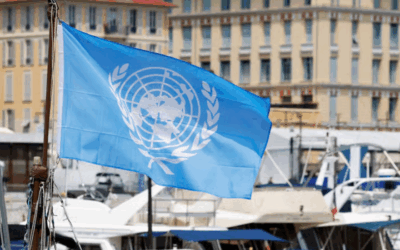
On Friday, 19 September 2025, the world made history. The High Seas Treaty was officially ratified, a milestone nearly twenty years in the making. First introduced by the United Nations (UN) in 2023, the treaty was created to protect marine biodiversity in areas beyond national jurisdiction.
Author: Ana Laura Schoorl
Until now, ocean governance has been scattered. While Marine Protected Areas (MPAs) safeguard parts of the ocean, nearly two-thirds of marine ecosystems remain unprotected and unregulated [1]. The High Seas Treaty changes this.
This blog post explores what the treaty means, why ratification matters, and what comes next as we move toward implementation.
What is the UN High Seas Treaty?
The idea for a global agreement to protect marine biodiversity began in the early 2000s and culminated in the adoption of the High Seas Treaty in 2023 [2]. Progress was slow, international waters lack clear borders, and uniting countries behind shared rules was a complex task.
The treaty is the first legal framework focused specifically on conserving biodiversity in international waters. It fills critical gaps in ocean protection and establishes guidelines for the sustainable use of marine resources.
With 75 articles, the treaty aims to strengthen global conservation initiatives, support climate and biodiversity goals, and reinforce efforts such as the High-Level Panel for a Sustainable Ocean Economy and the 100% Alliance [3],[4].
How the High Seas Treaty protects oceans
The ocean produces half the oxygen we breathe, absorbs large amounts of carbon, and supports millions of species, including us [5]. Yet, only 8.4% of the ocean is currently protected through MPAs [6].The rest remains vulnerable to pollution, overfishing, deep-sea mining, and climate change, all of which drive warming, acidification, and biodiversity loss [7].
On top of this, around 8 million tonnes of plastic enter the ocean every year, a trend that continues to threaten marine ecosystems [8].
The High Seas Treaty sets out actions in four key areas:
- Marine genetic resources and fair, equitable benefit-sharing
- Area-based management tools, including MPAs
- Environmental impact assessments
- Capacity-building and transfer of marine technology
Together, the treaty sets out a comprehensive governance framework to conserve marine biodiversity in international waters [9].
What does ‘ratification’ mean?
Officially known as the Agreement on the Conservation and Sustainable Use of Marine Biological Diversity of Areas Beyond National Jurisdiction (BBNJ Agreement), the treaty enters force once 60 countries ratify it [10].
At the UN Ocean Conference in June 2025, nearly 200 countries called for stronger ocean protection. Shortly after, on 19 September 2025, Morocco became the 60th country to ratify the treaty, triggering its implementation phase. It will officially enter into force on 17 January 2026 [11].
Many nations, including France, Chile, Kenya, Indonesia, Portugal, and Mexico, have already joined the agreement [12]. Major powers such as China, Russia, and the United States have not yet ratified it, which may affect the pace and scope of global enforcement.
How will the treaty be enforced?
Once in force, the High Seas Treaty will establish a global governance system to guide implementation. A Preparatory Commission will develop the structures needed for collaboration, enforcement, and funding.
By 2026, a Conference of the Parties (COP) will formally set up:
- Tools for sharing data, science, and marine technology
- Governance and monitoring systems
- Funding mechanisms for conservation and capacity-building
Monitoring the high seas (vast, remote, and largely unobserved) remains a challenge. Slow implementation and differing national interests also risk delaying progress on urgent issues, including plastic pollution [13].
However, a unified global framework will help align national efforts, support scientific collaboration, and strengthen the ocean’s long-term resilience.
What happens next?
When the treaty becomes active in January 2026, several initiatives will begin to take shape [14].
- Expanding MPAs to protect biodiversity hotspots.
- Sharing marine genetic resources fairly among all nations.
- Capacity-building and technology transfer for developing countries.
- Stricter rules for high-impact activities such as deep-sea mining and maritime transport.
The treaty reinforces global ambitions such as the 30×30 target, which aims to protect 30% of the world’s land and oceans by 2030 [15].
Beyond its legal strength, the treaty symbolises renewed global commitment toward ocean conservation, inspiring governments, institutions, and communities to take action. Together with initiatives like our Bubble Barrier, these efforts support a more resilient future for our planet.
Conclusion
For the first time ever, a global framework has been established to protect marine biodiversity beyond national borders. The ratification of the High Seas Treaty marks a historic turning point, one that brings hope, collaboration, and a shared responsibility to protect our ocean.
In November 2025, the High Seas Treaty won the ‘Revive Our Oceans’ category of The Earthshot Prize and 1 million USD to further scale the impact of their work [16].
As the treaty moves from words to action, we encourage you to stay informed, support ocean-focused organisations, and advocate for stronger policies. Every step helps protect the blue heart of our planet.
References
[1] Pickerell, T. (n.d.). After 20 years, an agreement to protect the “High Seas.” World Resources Institute. https://www.wri.org/insights/high-seas-treaty-explainer
[2] Pickerell, T. (n.d.). After 20 years, an agreement to protect the “High Seas.” World Resources Institute. https://www.wri.org/insights/high-seas-treaty-explainer
[3] António Guterres (UN Secretary-General) on Marine Biodiversity of Areas Beyond National Jurisdiction. (2023, June 20). [Video]. UN News. https://news.un.org/en/story/2023/06/1137857
[4] Pickerell, T. (n.d.). After 20 years, an agreement to protect the “High Seas.” World Resources Institute. https://www.wri.org/insights/high-seas-treaty-explainer
[5] António Guterres (UN Secretary-General) on Marine Biodiversity of areas beyond national jurisdiction. (2023, June 20). [Video]. UN News. https://news.un.org/en/story/2023/06/1137857
[6] Pickerell, T. (n.d.). After 20 years, an agreement to protect the “High Seas.” World Resources Institute. https://www.wri.org/insights/high-seas-treaty-explainer
[7] Martin. (2025, September 10). Goal 14: Oceans – United Nations Sustainable Development. United Nations Sustainable Development. https://www.un.org/sustainabledevelopment/oceans/
[8] Martin. (2025, September 10). Goal 14: Oceans – United Nations Sustainable Development. United Nations Sustainable Development. https://www.un.org/sustainabledevelopment/oceans/
[9] Martin. (2025, September 10). Goal 14: Oceans – United Nations Sustainable Development. United Nations Sustainable Development. https://www.un.org/sustainabledevelopment/oceans/
[10] High Seas Treaty & Biodiversity Beyond National Jurisdiction (BBNJ) – High Seas Alliance. (2025, November 10). High Seas Alliance. https://highseasalliance.org/treaty-negotiations/
[11] UN ‘high seas’ treaty clears ratification threshold, to enter into force in January. (2025, September 20). UN News. https://news.un.org/en/story/2025/09/1165901
[12] UNTC. (n.d.). https://treaties.un.org/doc/Publication/MTDSG/Volume%20II/Chapter%20XXI/XXI-10.en.pdf
[13] Pickerell, T. (n.d.). After 20 years, an agreement to protect the “High Seas.” World Resources Institute. https://www.wri.org/insights/high-seas-treaty-explainer
[14] Pickerell, T. (n.d.). After 20 years, an agreement to protect the “High Seas.” World Resources Institute. https://www.wri.org/insights/high-seas-treaty-explainer
[15] UNTC. (n.d.). https://treaties.un.org/doc/Publication/MTDSG/Volume%20II/Chapter%20XXI/XXI-10.en.pdf
[16] UNTC. (n.d.). https://treaties.un.org/doc/Publication/MTDSG/Volume%20II/Chapter%20XXI/XXI-10.en.pdf